Steel rarely gets much attention once it’s in place. People notice the finished building, the new bridge, or the machinery humming inside a factory. What they don’t usually think about is how those steel beams, coils, and plates made their way there in the first place. Long before construction begins or machines are assembled, steel has already taken a complicated journey. That’s where reliable steel logistics services quietly become essential.
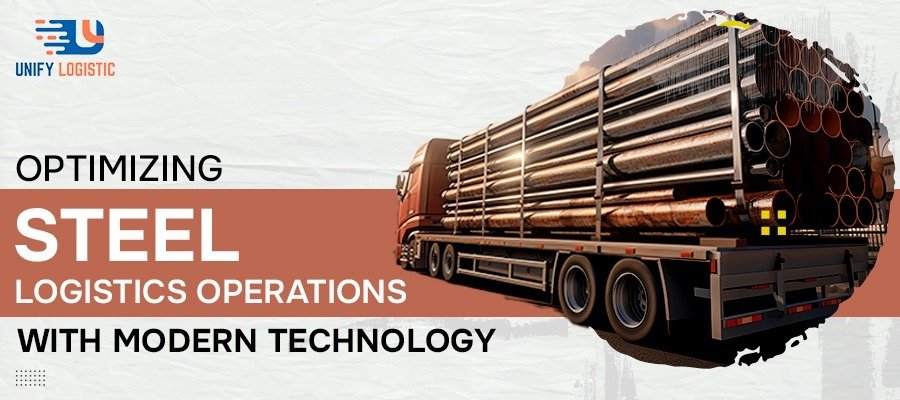
Steel is not an easy commodity to transport. It is dense, heavy, and rather awkwardly shaped. It might include massive coils, beams, or thick slabs that require rather specialized trailers. It is not even easy to load the steel in the first place. One miscalculation in securing the load, planning the route, or timing the delivery can affect numerous companies waiting on that particular load.
Because of this, logistics companies are gradually shifting away from old systems that relied heavily on manual coordination. Phone calls, spreadsheets, and scattered updates once held everything together. They still exist, of course, but they’re no longer enough for supply chains that move at today’s pace. Companies like Unify Logistic are increasingly leaning on digital tools that bring more visibility and structure into steel transportation.
Steel logistics isn’t built for guesswork:
If there’s one thing experienced logistics managers understand, it’s that steel shipments rarely follow a simple plan. A truck may leave a mill in one state, stop at a processing facility in another, and finally reach a construction site hundreds of kilometers away. Along the way there are checkpoints, warehouses, weigh stations, loading docks, each introducing another opportunity for delay.
For years, dispatch teams had to rely on constant back-and-forth communication to keep shipments on track. A driver might call in an update. A warehouse manager would confirm unloading times. Dispatch would adjust schedules if something unexpected happened.
It worked, but it required a lot of guesswork.
Modern logistics platforms are slowly replacing that uncertainty with something more reliable: visibility. Instead of piecing together updates from different sources, logistics teams can now see shipments moving in real time. Routes can be adjusted early, delays can be communicated clearly, and decisions are made with actual data rather than assumptions.
For companies like Unify Logistic Solutions, it’s not necessarily about cutting-edge technology; it’s about practicality. If the people running the operation have better information, things simply go better.
Seeing the whole journey:
One of the biggest changes technology has introduced into logistics is the ability to see what’s happening across the entire shipment journey. In the past, updates often arrived in fragments. A truck had left. Then it was somewhere on the highway. Then it had arrived, eventually.
Now, tracking systems make that movement far more transparent.
Dispatchers can monitor vehicles through GPS systems. Clients can receive updates about estimated arrival times. If traffic congestion or weather interferes with a route, the change becomes visible almost immediately.
That visibility matters more than people might think. Construction projects, for instance, often rely on steel arriving at very specific times. Deliver it too early and there may be nowhere to store it. Deliver it too late and workers are left waiting on site.
By having a clearer picture of where shipments are at any given moment, logistics teams can coordinate deliveries far more precisely.
The role of logistics networks:
Technology is an asset, but logistics has always been a collaborative industry. Even the best technology is of little use without transportation partners who can move goods.
Steel shipments often require flatbed trailers, reinforced trucks, and drivers familiar with handling oversized loads. Not every carrier specializes in this type of freight.
This is why freight broker services continue to play an important role in helping logistics companies access transportation services. Brokers have access to a variety of transportation companies, each with its capabilities. They can quickly connect shippers with carriers who meet specific transportation requirements.
In many ways, they function as problem-solvers within the supply chain, matching shipments with available capacity before delays begin to surface.
When these brokerage networks integrate with digital logistics systems, coordination becomes far easier. Information moves faster, and shipments spend less time waiting for arrangements to fall into place.
Learning from the data!
Every shipment tells a small story. How long did the journey take? Which route performed best? Whether loading take longer than expected?
Over time, these stories turn into data and that data becomes incredibly useful.
Logistics teams can look back at past shipments and identify patterns. Maybe a certain highway consistently slows down trucks during specific hours. Maybe certain carriers consistently deliver faster on particular routes.
Instead of repeating the same decisions again and again, companies can gradually refine their strategies.
Data is also useful to logistics companies in predicting changes in demand. Steel transport is known to rise with an increase in building projects and manufacturing activities. By analyzing past trends, logistics companies are better prepared to provide more capacity before the peak is reached.
A gradual transformation:
Steel may be one of the oldest materials used in modern industry, but the systems moving it are slowly becoming more advanced.
For logistics providers like Unify Logistic, modern technology isn’t just about efficiency metrics or automation. It’s about building supply chains that respond faster, communicate better, and keep projects moving even when conditions change.
Steel will always be heavy. Its transportation will never be simple, and there will always be challenges in Steel Logistics.
But with better tools, better planning, and the right partnerships, moving it across supply chains is becoming a little smarter, and a lot more predictable.
At Unify Logistic we combine industry experience with modern logistics systems to ensure your steel shipments move safely and efficiently.
Reach out to us and move better!