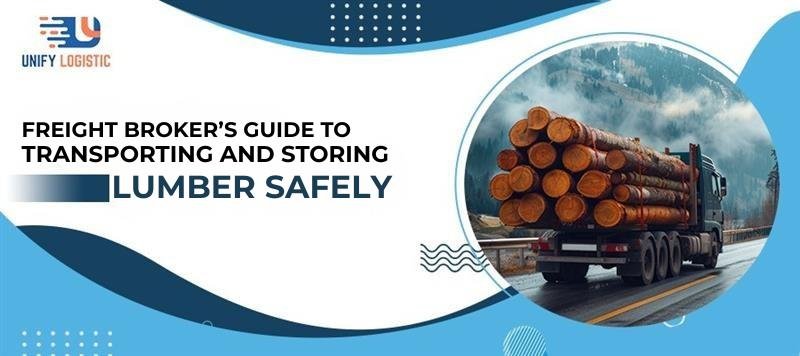
Lumber happens to be the most sensitive commodity. It comes in different sizes, usually transported in the form of long and heavy bundles. It is sensitive to weather and can get damaged easily during transit.
However, experienced brokers can simplify transporting lumber and reduce your stress. With the right freight broker, your business must not juggle complex lumber shipments alone.
Unify Logistics presents this blog with all details of how freight brokers can handle the highly demanding freight category of lumber. Continue reading the blog to know more about freight forwarding, building a logistics strategy, and transporting lumber effectively and on time.
Let’s take a closer look at how freight brokers manage lumber shipments safely and efficiently in today’s complex supply chains.
Effective Lumber Logistics Is a Result of Efficient Carrier Networks
Lumber logistics efficiency begins with the right carrier network that ensures speed and safety. And a trucking company alone cannot handle lumber shipments. That’s why organizations need a framework, a system that aligns all crucial steps of lumber logistics.
Freight brokerage companies bring a solid system to the table and change the game with a reliable carrier network. They know that lumber transportation depends on loading and safekeeping techniques.
Lumber logistics thrives on two important techniques: loading and safekeeping. These are possible only when the mode of transportation is right and the driver is skilled. Keeping these requirements in mind, freight brokers choose their carriers very carefully and ensure they are well-trained and well-equipped.
They ensure that your timber is transported via specific trucks to manage long bundles of timber. Flatbeds and step-deck trailers are the most commonly used trucks for lumber loads.
The Importance of Time in Lumber Transportation
Transporting lumber is not a cakewalk; it is based on tight schedules, close delivery deadlines, and safety of the load. Getting the raw material is a crucial aspect for businesses that work with lumber, and that is why timing is so important.
When freight brokers focus on meeting the time deadlines, automatically they have to plan other things like protection of lumber in different seasons and damage during transit.
Also, fluctuating temperatures and weather conditions like rain and humidity do not allow timber to be kept in transit for long. That’s why logistic partners have to manage everything within a safe time limit.
Freight forwarding of lumber has to be different and done with precision. Professionals achieve this by coordinating specific timings for pickups and deliveries. They work on minimizing unnecessary stops or delays to ensure no time is wasted. They also select efficient transportation routes and monitor shipments closely.
Effective and timely lumber logistics depend on keeping lumber moving rather than staying in unpredictable environments.
Lumber Loading Is Another Crucial Point
There are various challenges in lumber transportation, but most of them can be managed if the loading process is done smartly. This part is done even before the trucks go on the roads, and that’s why coordination plays an important role here.
Freight brokers coordinate with the carriers and the suppliers and review loading practices to ensure everything is done in a secure manner. Poor loading can cause damage during transit as bundles can shift during transit. More than the safety of lumber, proper loading is also vital to prevent accidents on the road.
Some of the best practices that ensure secure transportation include stacking bundles and banding them tightly with straps. When the lead is placed strategically on the truck and secured tightly, it prevents movement and damage.
Experienced freight brokers know that safe lumber transport begins with disciplined loading practices at the origin point.
You Can’t Neglect the Aspect of Weather
Weather is lumber logistics' biggest challenge. During transit, rain, snow, or humidity can create moisture in the truck, affecting the quality of wood.
Usually, the long blocks of lumber are transported on open flatbed trailers, which are exposed to all types of weather conditions. But carriers carry tarps that shield the load from rain, snow, and heat.
Saying that tarping is done is only half of the problem solved. To ensure maximum protection, carriers have to do the tarping right. That means securing the tarp properly is crucial. The tarp must not collect water, tear during transit, or allow wind or rain to reach the lumber. Skilled flatbed carriers understand how to secure tarps tightly, prevent water collection, and ensure the load remains protected throughout the trip.
Freight brokers who regularly move lumber tend to prioritize working with carriers who specialize in weather-sensitive freight. Their expertise ensures the product arrives dry and intact.
Coordination is the Key to Ensure Safe Storage
Freight forwarding is not always a single-day task, and transportation may take more time to reach far-away destinations. It is important to store lumber in proper warehouses during the waiting time.
That’s where the role of third-party logistics (3PLs) comes into action. Freight brokers coordinate with appropriate warehousing options and ensure that even during the waiting time, lumber is safe. The appropriate warehouse must allow airflow and prevent moisture absorption.
In supply chains related to construction, lumber is sometimes staged in regional warehouses before being distributed to multiple job sites. Freight brokers help coordinate these staging operations, so the material remains protected before the final delivery.
Logistic Visibility and Tracking Prevent Damage
In today’s world, logistics is incomplete without technologically advanced tracking and visibility tools. These play an important role in ensuring that shipment reaches the destination safely.
Tracking tools give real-time visibility into the location of the shipment and different weather conditions. If a delay occurs due to weather, mechanical issues, or traffic, brokers can quickly communicate with both the carrier and the customer to adjust plans.
This level of visibility helps reduce uncertainty and allows logistics teams to respond quickly when unexpected disruptions arise. With proactive communication, shipment risks can be reduced effortlessly.
The Role of a Freight Broker in Risk Prevention
Lumber or some other type of commodity, there is risk in every shipment, but experienced freight brokers know how to manage it effectively.
This is done by verifying that carriers maintain proper cargo insurance and comply with transportation safety regulations. In case any damage happens to your load, your logistics partner also resolves the issue and helps you get claims.
However, freight brokers play a bigger role than this, and that is preventing complexities even before they happen. They do this by selecting reliable carriers, planning routes carefully, and ensuring proper handling practices.
Lumber Logistics Done Right with Unify Logistic Solutions
Safe and timely lumber logistics is a result of thoughtful planning, clear coordination, and precise handling. By now, it is clear that lumber transportation is more than moving goods from one place to another.
Unify Logistic Solutions offers services that offer your business a strong foundation in lumber logistic solutions. As an experienced freight brokerage company, we connect you to the carriers right for your requirements, plan transit, manage timelines, coordinate with all parties, and ensure secure shipment. We ensure that every step is curated to make your delivery seamless and damage-free.
With Unify Logistic Solutions, lumber moves smoothly and reaches destinations in the best condition, causing zero delays in your next project. If you are struggling to keep your lumber in the best condition and deliver it on time, you need a partner like us.
Our team will form the best strategy for lumber transportation and ensure every board is safe along the way. Contact us, inquire about our services, and get started!